

Graphic by Angie Cho
Federally funded science made it possible for Isako Di Tomassi to become a scientist. And without it, she might have never become one.
Now a third-year Ph.D. student at Cornell University studying plant pathology, Tomassi is using her voice — and her writing — to fight for the research that made her a scientist.
Tomassi was first exposed to a career in science through a research experience for undergraduates (REU). Typically supported through the National Science Foundation, REUs are meant to boost young scientists’ careers. They were recently downsized due to funding and DEI concerns.
“These programs really aim to make a diverse and inclusive talent pool,” Tomassi said. “It gives opportunities for students who might not have access to these opportunities to do research, a chance to participate and become scientists.”
Tomassi was one of these students, and said these programs were crucial to her as someone who had to financially support herself through college.
But due to funding cuts, Tomassi says she now feels “uncertain” about her future in science. Even if grants have not been completely terminated, billions of dollars have been frozen, leaving researchers unsure of if and when their funding will come.
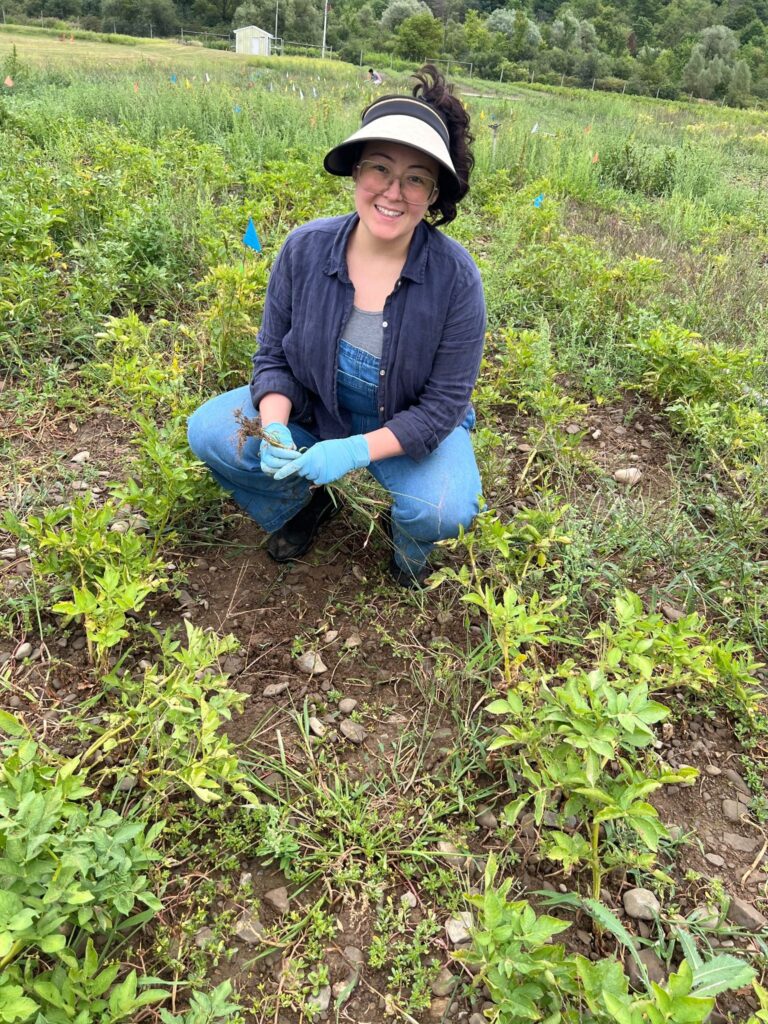
When Tomassi’s Ph.D. advisor, a federal scientist who worked for the U.S. Department of Agriculture, was fired because of funding cuts, Tomassi said it was “devastating.”
To make matters worse, she saw posts on social media supporting the cuts.
When she posted online about her advisor’s firing, the comments were celebratory. People were wondering why researchers like Tomassi or her advisor were receiving so much money to conduct research that they deemed unnecessary. (Plant pathology is the study of plant diseases and how they’re transmitted; the research helps protect crops and strengthen global food security).
The general public didn’t seem to understand the work scientists like Tomassi were doing, or why it was important.
That was the impetus to begin the McClintock Letters.
From science to journalism
Spearheaded by Tomassi and her cofounder, Emma Scales, the McClintock Letters initiative is a science communication project that publishes opinion pieces written by scientists about their work and why it should continue to be funded.
From protecting apples in Washington state to developing novel insecticides in Indiana, the initiative has published over 200 op-eds, all written by scientists defending their federally funded science, across 46 states.
“We wanted to kind of move the needle on the public perception of the value of federally funded research,” Tomassi said. “We need to build that trust and that connection with the public and with the communities we are part of and from.”
In addition to publishing letters across the country, Tomassi said the initiative teaches scientists how to write and communicate their work, skills that they otherwise would have never learned.
“We’re trained to write in this jargon-heavy, highly technical way,” she said. “But writing an opinion piece or letter to the editor about your work for a local newspaper is very different. And it’s important that scientists are trained to communicate in this way to the public.”
Tomassi added that communication was the biggest barrier between the scientists and the public. She believes the kinds of comments she received supporting scientific funding cuts were because scientists lack the skills to communicate their work.
“This is something that we as scientists, as scientific institutions, as researchers, need to do a better job of communicating, how important the work we do is.”
Federal funding as a scientist and patient
While a senior at Emory University, Erin Morrow underwent heart surgery to correct her electrical heart disorder, heart block. The disorder causes the top and bottom chambers of the heart to be out of sync, resulting in a slow heartbeat.
The potentially deadly disorder was corrected with a pacemaker she received when she was just 21. Federally funded research made this possible.
“The pacemaker wouldn’t have existed without decades of federal investment and research,” Morrow said. “Both into the medical device itself, but also just the basic science behind how the heart’s electrical system works. And if that federally funded research hadn’t happened, I don’t know if I’d be here today.”
Now a fourth-year Ph.D. student in cognitive neuroscience at UCLA, Morrow said her experiences as a scientist and patient put her in a “unique position.”
Funding cuts haven’t directly impacted Morrow, but her institution was battling the Trump administration for months, and only recently had its $500 million research fund restored.
“I’m just your neighbor.”
Morrow was a part of the grassroots group of early-career researchers to expand the McClintock Letters. Her op-ed was published in the Marietta Daily Journal over the summer. She said local newspapers were a way to “cut through” the noise of federal funding news and connect with her own community.
“When I published my McClintock Letter in my local hometown newspaper, people were realizing there is a scientist in their community,” she said. “Scientists are embedded within communities, they’re community members, their journey into science has been shaped by their community. I’m just your neighbor.”
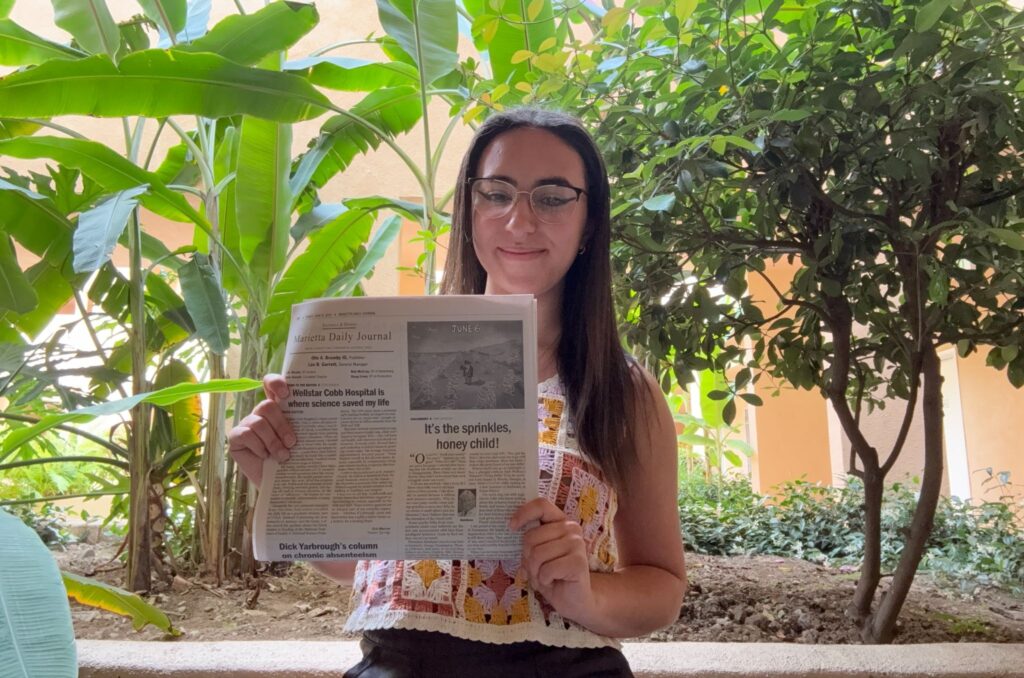
Like Tomassi, Morrow said communication is a key issue when it comes to increasing the public’s understanding of scientific research. They both agreed that scientists aren’t incentivized to communicate their work or share it with the world.
But Morrow said there’s another aspect to communication: humanity.
“I think it really just comes down to like, talking to people. Remembering you’re human first and scientist second.”
While the initiative hasn’t hit its goal of publishing a thousand op-eds yet, Tomassi and Morrow still have the same goal of connection.
“It’s just incredible to be able to make these community connections with scientists, to really get out there and be talking to people,” Tomassi said.
“We’re just people at the end of the day,” Morrow said. “And these grant cuts are about people, and I think that’s the message we need to convey.”


Comments are closed.