After calling for a Free Palestine, Macklemore was banned from opening for Ed Sheeran’s tour at the request of Gillette Stadium owner and pro-Israel billionaire Robert Kraft. Sheeran claimed he was “not complicit” in Israel’s genocide of Palestinians in a response following backlash. Despite this, he refused to share any of his personal beliefs on the matter — noting those who come to his show “do not expect a political forum.” Bullshit.

Though the future may seem bleak, far-right parties eventually fall in power and return to the fringes of society. We must remember that the scapegoats the far-right uses are just that: scapegoats.
The meat and bones of traditional American political discourse are falling by the wayside. Where there used to be a productive back-and-forth and search for common ground, there is now an inflexible and relentless us-versus-them mentality.
The Staller Center for the Arts recently opened a new exhibit in the Paul W. Zuccaire Gallery titled “Revisiting 5+1.” A reflection of the 1969 exhibition of abstract art “5+1,” the new exhibit highlights major works of Black artists through the experimental painting, sculpture and film of the 1960s and ‘70s.
What Cuban poster artists did in the 1960s and 1970s was not just a random, lucky occurrence. It was a prime example of a complex process that involves referencing and appropriating visual material from the past — a complex process still employed today.
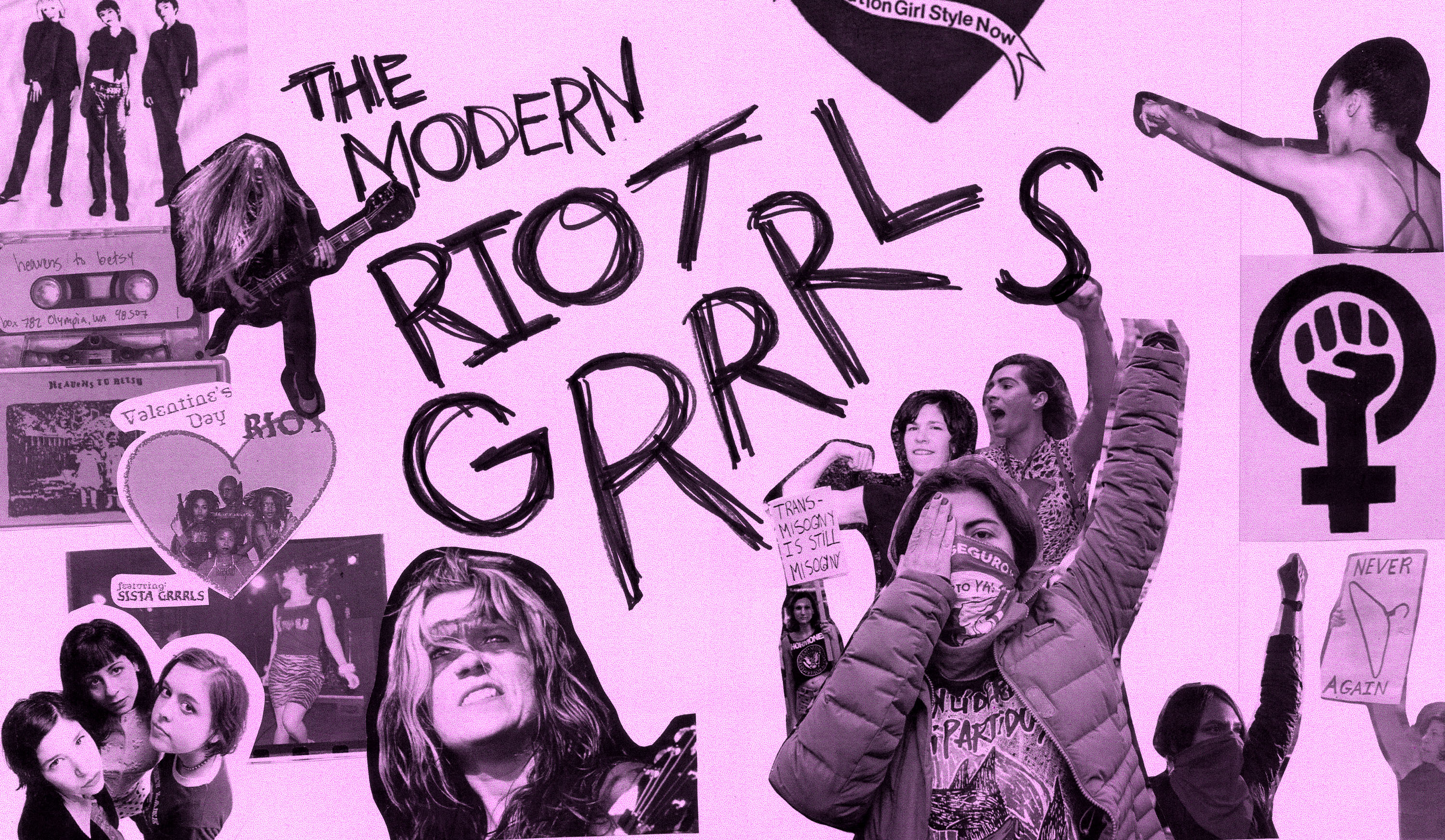
Since its birth in the early ‘90s, the riot grrrl movement has been criticized for being exclusive, and many of the earliest riot grrrl acts did follow a certain mold: white, American, cisgender, thin, English-speaking. Because of this exclusivity, many critics of the movement — and even its founders — have said riot grrrl is dead, and rightfully so. Others, like Larissa Oliveira, are less sure.
Recently, I rewatched South Park: Bigger, Longer and Uncut — multiple times, to be exact — and realized what a satirical masterpiece it is. The movie is as old as me, but the core message underneath the various shits, assholes and uncle fuckers is one that still speaks to modern society: America places the blame for its problems on everyone but itself.
In the auditorium of one the local high schools, I stood next to my dad inside the poll. “I don’t care who wins,” he said, looking at me. “You pick.” Nine-year-old me stood there, wide-eyed, next to my dad. I get to pick? I get to vote?
All Americans — regardless of their political affiliations — must confront the danger in simply accepting a figure’s claims without skepticism.